da Vinci Research Kit (dVRK)
Robot / hardware buildOpen controller electronics, FPGA firmware and cisst/SAW software for research systems built from retired da Vinci arms and consoles; the arms themselves are supplied hardware, not an open design. [6] [10]
Build & first use →Official websiteUpstream build guideBill of materials
- For
- Research institutions that already hold, or can obtain, retired da Vinci arms or consoles and can configure Linux, ROS, controllers and calibration [6] [7] [8]
- Cost
- No current cost yet. Upstream bill of materials [14]
- Source rights
- Some licenses are unresolved. Review licenses
- Unknowns
- tools not fully established. Review gaps
Source researched · Not tested by us
Sources checked · Research details
Licenses & related hardware
- License
- CISST Software License Agreement v1.0 (Johns Hopkins University) · no license identified for electronics · license not fully assessed for firmware, documentation · Details by part
Overview
The dVRK is an "open-source mechatronics" system: electronics, firmware and software used to control research systems built from retired da Vinci surgical robots. Upstream reports deployment at more than 40 institutions. The arms, consoles and setup joints are not an open design. They come from retired clinical systems, and the documentation notes that each group's kit differs with the hardware it receives. [6]
Is this for you?
- Use cases
- Teleoperation research with surgeon-console MTMs controlling patient-side PSM and ECM arms
Derived from the documented component roles and teleoperation release notes; no clinical use.
- Known limitations
- Manipulators and consoles are retired Intuitive Surgical hardware; no open mechanical design for them was identified
- Upstream states the dVRK is not FDA approved and must not be used on patients
- Each kit differs with the hardware a group receives; setup, configuration and calibration are owner tasks
- No license file identified in the inspected controller-board and FPGA-firmware archives
Source-review boundaries; no hardware tests.
What you need
- Operating system
- Ubuntu 24.04 (recommended), 22.04 or 20.04 for dVRK 2.4 and main with ROS 2
- Ubuntu 20.04 for ROS 1 Noetic
The computers page lists requirements for "dVRK 2.4 and main"; a separate 2.5.0 OS statement was not identified.
- Host computer
Linux PC; documentation recommends at least 8 cores, 16 GB RAM (32 GB recommended), an SSD and a dedicated FireWire controller, with a second PC suggested for video or heavy computation.
- Dependencies
- cisst libraries
- sawRobotIO1394
- sawControllers
- ROS 2 (recommended from dVRK 2.4.0) or ROS 1 Noetic
- Skills
- Software, mechanical and robotic knowledge for configuration (upstream disclaimer)
Hardware & parts
Upstream bill of materials [14]
- Hardware configuration
Teleoperated research system: surgeon-side MTMs and patient-side PSM and ECM arms (with setup joints) from retired da Vinci systems, driven by dVRK controllers.
- Actuators
- Original motors in the retired da Vinci arms, powered by QLA linear amplifier boards (Classic) or dRAC boards (Si)
- Controller
dVRK controllers pairing an FPGA1394 logic board (Rev 3.x uses a Xilinx Zynq XC7Z020) with a QLA (Classic) or dRAC (Si) board; control computation runs on a Linux PC.
Assembly & first use
Open the upstream getting-started guide [7] · Project documentation [3] [6]
- Confirm which arm generations you hold against the supported-generation list
- Obtain controllers through the Intuitive Foundation route or the dVRK developers, or review the board designs if self-manufacturing
- Prepare a Linux PC with a supported FireWire or Ethernet adapter and the Ubuntu/ROS combination for your dVRK release
- Build the cisst/SAW stack and configure and calibrate each arm
Editorial source-navigation sequence, not reproduced installation or safe-to-run instructions.
- Assembly
Not a turnkey system. Controllers are normally obtained through the Intuitive Foundation route or the dVRK developers; upstream calls self-manufacture from the open designs much more difficult. PC setup, configuration and calibration are performed by the owner.
- Calibration
Performed by each dVRK owner for their own hardware.
Cost
No current, complete configuration-specific build cost has been established for this profile.
Cost and what remains unknown
No price for controllers, retired arms or a complete system was identified, so the cost is not established. The dRAC and adapter-board designs and the cisst, sawRobotIO1394 and sawControllers dependencies were not preserved or inspected. [1] [7] No installation, controller build, calibration or hardware test was performed for this entry.
3D preview
Preview not available yet. The reviewed sources did not establish a supported 3D payload for a hosted preview. The design may be supplied as drawings, an external CAD document or a separate download.
Model sources
The reviewed sources did not establish a supported 3D payload for a hosted preview. The design may be supplied as drawings, an external CAD document or a separate download.
Project notes
Who can realistically use it
Most groups received their retired arms through the Intuitive Foundation, and some salvaged systems from hospitals; upstream also names auction sites as a possible source. Controllers come through the Foundation route or the dVRK developers. Building your own controllers from the open designs is possible, but upstream calls it "by far, a much more difficult approach" and knows of one group that did it. [7] Check your arms against the support list first: Classic and S MTMs and Classic PSMs, ECMs and setup joints use QLA-based controllers, Si PSMs and ECMs use dRAC-based controllers, and X, Xi and 5 hardware is not supported. [13]
The group then does the integration itself: PCs are bought separately, and setup, configuration and calibration are the owner's job, which upstream says requires software, mechanical and robotic knowledge. [6] [8] Upstream also states that the dVRK is not FDA approved, must not be used on patients, carries no warranty and is not a turnkey system. [8] This catalog makes no safety, clinical or medical-suitability assessment.
Configuration covered
This entry covers software release 2.5.0 (published 2026-08-23), which adds native Si setup-joint support, alternate master devices including Haply for ECM teleoperation, and Qt6 builds. Since 2.4.0, upstream recommends ROS 2 on Ubuntu 24.04. [2] [3] The computers page asks for a Linux PC with at least 8 cores, 16 GB RAM (32 GB recommended) and a dedicated FireWire controller; a full Classic system with 13 boards can share one FireWire port. Its OS list is labelled "dVRK 2.4 and main", so confirm 2.5.0 support before installing. [12]
Each controller pairs an FPGA1394 logic board with a QLA board (Classic) or a dRAC board (Si); the 2026 Classic build CA10 lists FPGA 3.2 with QLA 1.6. [10] [11] The preserved QLA and FPGA1394V3 repositories contain Altium projects, PDF schematics, BOM spreadsheets and Gerber and assembly archives. Firmware release Rev10 covers FPGA1394 Rev 1.x to 3.x. [14] [15] [16]
What we checked
Source research only; no installation, physical build, calibration or test performed. The catalog makes no safety, clinical or medical-suitability assessment; upstream states the dVRK is not FDA approved and must not be used on patients. No affiliate links.
Not yet established
- Requirements: tools
Updates
- Upstream last updated
- Sep 24, 2026 [2]
- Latest release
- Aug 23, 2026 [2]
- Profile updated
- Oct 26, 2026
- Sources last checked
- Oct 5, 2026
- Next review
- Nov 5, 2026
- Reviewed revision
- sawIntuitiveResearchKit 2.5.0 (commit 92e5495254826cb32bdb927ebe3a75a8d4b4a0e8); controller design snapshots QLA dfb1b150b5ff and FPGA1394V3 e0eb132bea81 (no releases); mechatronics-firmware Rev10 (3b80cc81f410); mechatronics-software 2.4.0 (2fc5092d0f99) · software repository
Source files and licenses
Controllers, firmware and software are published and actively released, but the robot arms are retired proprietary hardware and the electronics and firmware carry no identified license file. Covered as a research platform whose open layers are the controllers and software.
| Layer | Availability / license |
|---|---|
| mechanical design | unavailable · License not fully assessed Arms, consoles and setup joints are retired Intuitive Surgical hardware obtained through the Intuitive Foundation, hospitals or resale. No open mechanical design for the manipulators was identified in the inspected sources. [6] [7] |
| electronics | available · No license identified QLA and FPGA1394V3 Altium projects, PDF schematics, BOM spreadsheets and Gerber/assembly archives preserved. No license file identified in the inspected QLA or FPGA1394V3 archives; the documentation says the designs are freely available on GitHub, which is not a stated license grant. dRAC (Si) and adapter-board repositories not preserved. [10] [14] [15] |
| firmware | available · License not fully assessed Verilog for FPGA1394 Rev 1.x-3.x with QLA, DQLA and DRAC companions; files carry Johns Hopkins University copyright headers. No license file or license notice identified in the inspected archive. Builds use Xilinx tools per README. [16] |
| software | available · CISST Software License Agreement v1.0 (Johns Hopkins University) README links the cisst license; source headers in sawIntuitiveResearchKit and mechatronics-software state it. Terms include a required notice preface, marking of modified versions and a clause that clinical use is neither recommended nor advised. Dependency repositories not preserved. [1] [4] [5] [17] |
| documentation | available · License not fully assessed Preserved pages show a Johns Hopkins University copyright line; no documentation license identified in the preserved pages. The documentation repository was not preserved. [6] [8] |
Control software; no learned model is part of the reviewed configuration.
No dataset is part of the reviewed configuration.
Licenses by layer
- Software: the README and source headers apply the cisst license from Johns Hopkins University. It grants a royalty-free license with a required notice preface and marking of modified versions, and says clinical use is neither recommended nor advised. [1] [4] [5] [17]
- Electronics and firmware: no license file was identified in the inspected QLA, FPGA1394V3 or firmware archives; firmware headers carry a Johns Hopkins copyright line. The documentation's statement that designs are "freely available on GitHub" describes access, not reuse terms, so redistribution and manufacturing permissions remain unresolved. [10] [14] [15] [16]
- Documentation: pages carry a Johns Hopkins copyright line; no documentation license was identified. [6]
References
Each source links to the exact revision we read. “Used for” shows where this page relies on it.
- S001 sawIntuitiveResearchKit README
Describes libraries and applications for the dVRK, links the cisst license, lists Linux-only and cisst/sawRobotIO1394/sawControllers dependencies.Revision, date & where cited
Johns Hopkins University dVRK group / project contributors · github.com · revision
92e5495· README.md at release 2.5.0 · Accessed Oct 5, 2026
Used for: What you need, Cost, Source files and licenses - S002 sawIntuitiveResearchKit release 2.5.0 and repository metadata
Latest stable release selected by acquisition; release and push dates; dated popularity counts.Revision, date & where cited
Johns Hopkins University dVRK group / project contributors · github.com · Tag 2.5.0, commit ; GitHub repository API metadata · Accessed Oct 5, 2026
Used for: Configuration covered, What we checked - S003 sawIntuitiveResearchKit change log
Release notes for 2.5.0 (Si SUJ support, Haply alternate masters, Qt6 build) and 2.4.0 (ROS 2 and Ubuntu 24.04 recommendation, documentation move).Revision, date & where cited
Johns Hopkins University dVRK group / project contributors · github.com · revision
92e5495· CHANGELOG.md, sections 2.5.0 and 2.4.0 · Accessed Oct 5, 2026
Used for: Is this for you?, What you need, Assembly & first use, Configuration covered - S004 sawIntuitiveResearchKit license headers and package manifest
Source headers state the cisst license and point to license.txt; package.xml declares license "cisst" and names the maintainer.Revision, date & where cited
Johns Hopkins University dVRK group / project contributors · github.com · revision
92e5495· core/CMakeLists.txt header; share/package.xml · Accessed Oct 5, 2026
Used for: Source files and licenses - S005 CISST Software License Agreement v1.0
Full license text: royalty-free non-exclusive license with sublicensing conditions; clinical use neither recommended nor advised.Revision, date & where cited
The Johns Hopkins University · github.com · revision
1abca86· license.txt at jhu-cisst/cisst commit · Accessed Oct 5, 2026
Used for: Source files and licenses - S006 dVRK documentation: What is the dVRK?
Defines the dVRK as open electronics, firmware and software controlling research systems built on retired da Vinci systems; lists kit composition.Revision, date & where cited
Johns Hopkins University dVRK group / project contributors · dvrk.readthedocs.io · Section 1.1 (readthedocs main) · Accessed Oct 5, 2026
Used for: Overview, Is this for you?, Assembly & first use, Who can realistically use it and 1 more - S007 dVRK documentation: How to get a dVRK?
Sources for retired hardware and controllers; self-manufacture described as much more difficult.Revision, date & where cited
Johns Hopkins University dVRK group / project contributors · dvrk.readthedocs.io · Section 1.3 · Accessed Oct 5, 2026
Used for: Assembly & first use, Cost, Who can realistically use it, Source files and licenses - S008 dVRK documentation: Disclaimers
Not FDA approved, not for use on patients, no warranty, assembly required, dVRK is not equivalent to the clinical da Vinci.Revision, date & where cited
Johns Hopkins University dVRK group / project contributors · dvrk.readthedocs.io · Section 1.2 · Accessed Oct 5, 2026
Used for: Is this for you?, What you need, Assembly & first use, Who can realistically use it and 1 more - S009 dVRK documentation: da Vinci Classic components
Lists Classic/S components usable with the dVRK (MTMs, PSMs, ECM, SUJ, pedals, HRSV) and unsupported components.Revision, date & where cited
Johns Hopkins University dVRK group / project contributors · dvrk.readthedocs.io · Section 2.1.1.1 · Accessed Oct 5, 2026
Used for: Is this for you?, Hardware & parts - S010 dVRK documentation: controller boards introduction
Centralized PC control with distributed I/O; FPGA logic board paired with QLA (Classic) or dRAC (Si); board designs, BOMs and firmware described as freely available on GitHub.Revision, date & where cited
Johns Hopkins University dVRK group / project contributors · dvrk.readthedocs.io · Section 2.2.1.1 · Accessed Oct 5, 2026
Used for: Hardware & parts, Configuration covered, Source files and licenses - S011 dVRK documentation: controller versions
Classic arm controller builds CA0-CA10 and Si builds SA1-SA2 with FPGA/QLA/dRAC versions; FireWire on all, Ethernet from FPGA 2+.Revision, date & where cited
Johns Hopkins University dVRK group / project contributors · dvrk.readthedocs.io · Section 2.2.5 build tables · Accessed Oct 5, 2026
Used for: Configuration covered - S012 dVRK documentation: computers
Recommended Linux PC, FireWire adapter guidance and Ubuntu/ROS versions per dVRK release line.Revision, date & where cited
Johns Hopkins University dVRK group / project contributors · dvrk.readthedocs.io · Section 2.3.1 · Accessed Oct 5, 2026
Used for: What you need, Assembly & first use, Configuration covered - S013 dVRK documentation: generations of da Vinci systems
Supported and unsupported arm generations and controller pairings.Revision, date & where cited
Johns Hopkins University dVRK group / project contributors · dvrk.readthedocs.io · Section 13.2.2 dVRK support · Accessed Oct 5, 2026
Used for: Hardware & parts, Assembly & first use, Who can realistically use it - S014 QLA board design files
Altium project, PDF schematics, BOM spreadsheet, Gerber and assembly archives; release notes through Rev 1.6; no license file in the 21-member archive.Revision, date & where cited
Johns Hopkins University (jhu-cisst) / project contributors · github.com · revision
dfb1b15· README.md and archive inventory at commit (snapshot; no release) · Accessed Oct 5, 2026
Used for: Is this for you?, Hardware & parts, Configuration covered, Source files and licenses - S015 FPGA1394V3 board design files
Zynq XC7Z020-based Rev 3.x logic board in Altium format with schematics PDF, BOM and panel fabrication files; no license file in the 22-member archive.Revision, date & where cited
Johns Hopkins University (jhu-cisst) / project contributors · github.com · revision
e0eb132· README.md and archive inventory at commit (snapshot; no release) · Accessed Oct 5, 2026
Used for: Is this for you?, Hardware & parts, Configuration covered, Source files and licenses - S016 FPGA firmware (mechatronics-firmware) release Rev10
Verilog firmware for FPGA1394 Rev 1.x-3.x with QLA, DQLA and DRAC companions; JHU copyright headers; no license file found among 183 archive members.Revision, date & where cited
Johns Hopkins University (jhu-cisst) / project contributors · github.com · revision
3b80cc8· README.md, FPGA1394_QLA/Verilog/DRAC.v header and archive license-file check at tag Rev10 () · Accessed Oct 5, 2026
Used for: Is this for you?, Configuration covered, Source files and licenses - S017 Mechatronics software (Amp1394) release 2.4.0
Low-level FPGA board interface library, programmer and tests; cisst license header.Revision, date & where cited
Johns Hopkins University (jhu-cisst) / project contributors · github.com · revision
2fc5092· README.md and CMakeLists.txt header at tag 2.4.0 () · Accessed Oct 5, 2026
Used for: Source files and licenses - S018 Upstream image and reuse attribution
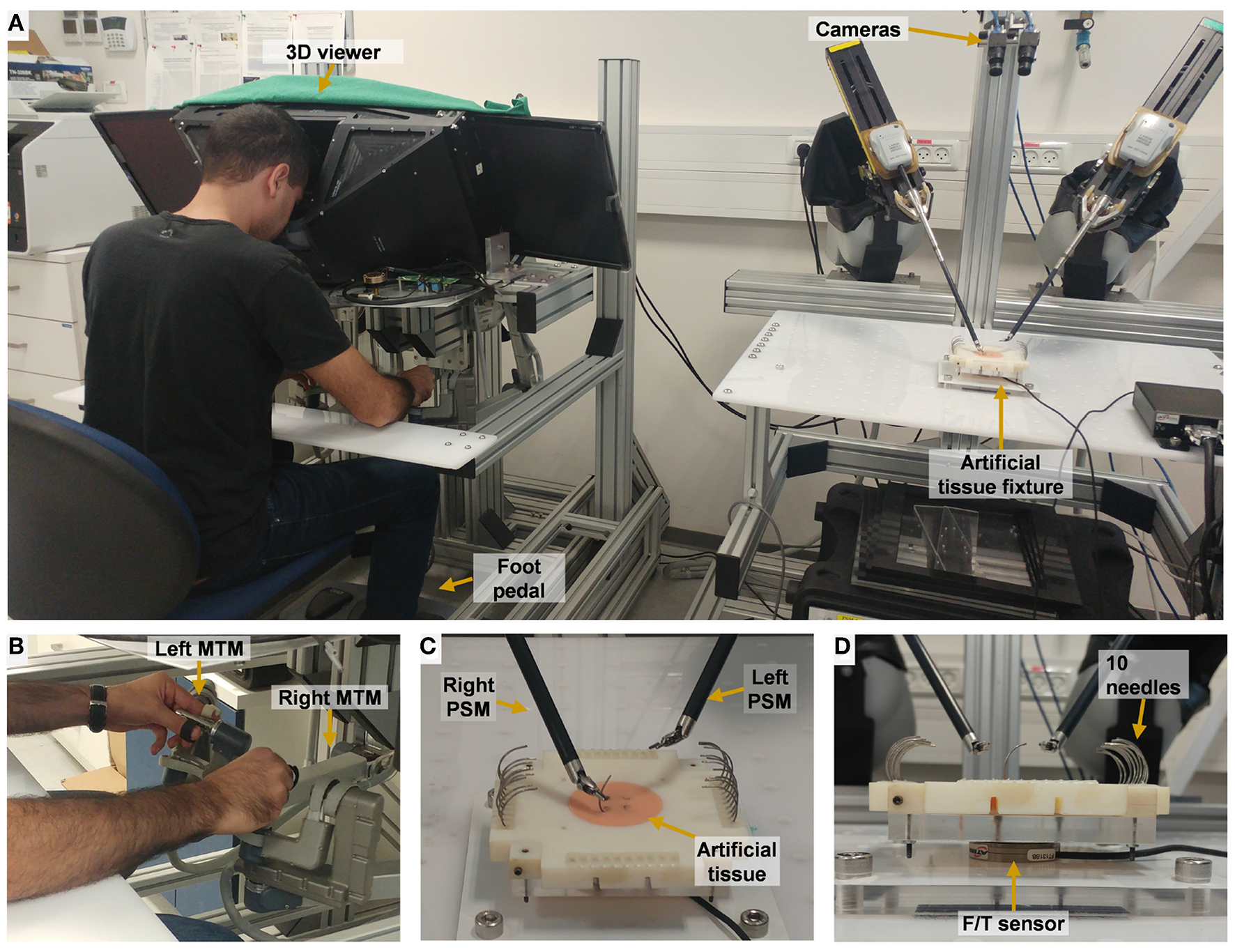
Media-only review: Upstream paper photographs of a dVRK needle-driving research setup (Figure 2); this is one laboratory configuration. Reuse basis: CC-BY-4.0. Inspected the source image, its caption and the actual reuse declaration; no image-specific exception or different credit was found for this selected image. The grant is used only for this media, not as a new hardware/software license. Original image unchanged; displayed responsively. Technical/cost evidence dates unchanged.Revision, date & where cited
Lidor Bahar, Yarden Sharon and Ilana Nisky · doi.org · Figure 2, experiment overview and detail panels; image SHA-256 f4ccfecc1303d1c28e270713e30ea38e2c6ab864b3bd80f95e05dda027e837fb · Accessed Oct 26, 2026
Correction guidance · Discussion is not enabled · Profile format 0.7.0-draft.5
Change history
2026-10-05 — Initial intake from the Growbotics comparison lead; verified against upstream repositories and documentation.
2026-10-26 — Added attributed upstream media with linked reuse terms; technical evidence dates unchanged.